Why You Should Never Top Your Trees: A Monona Pruning Education Guide
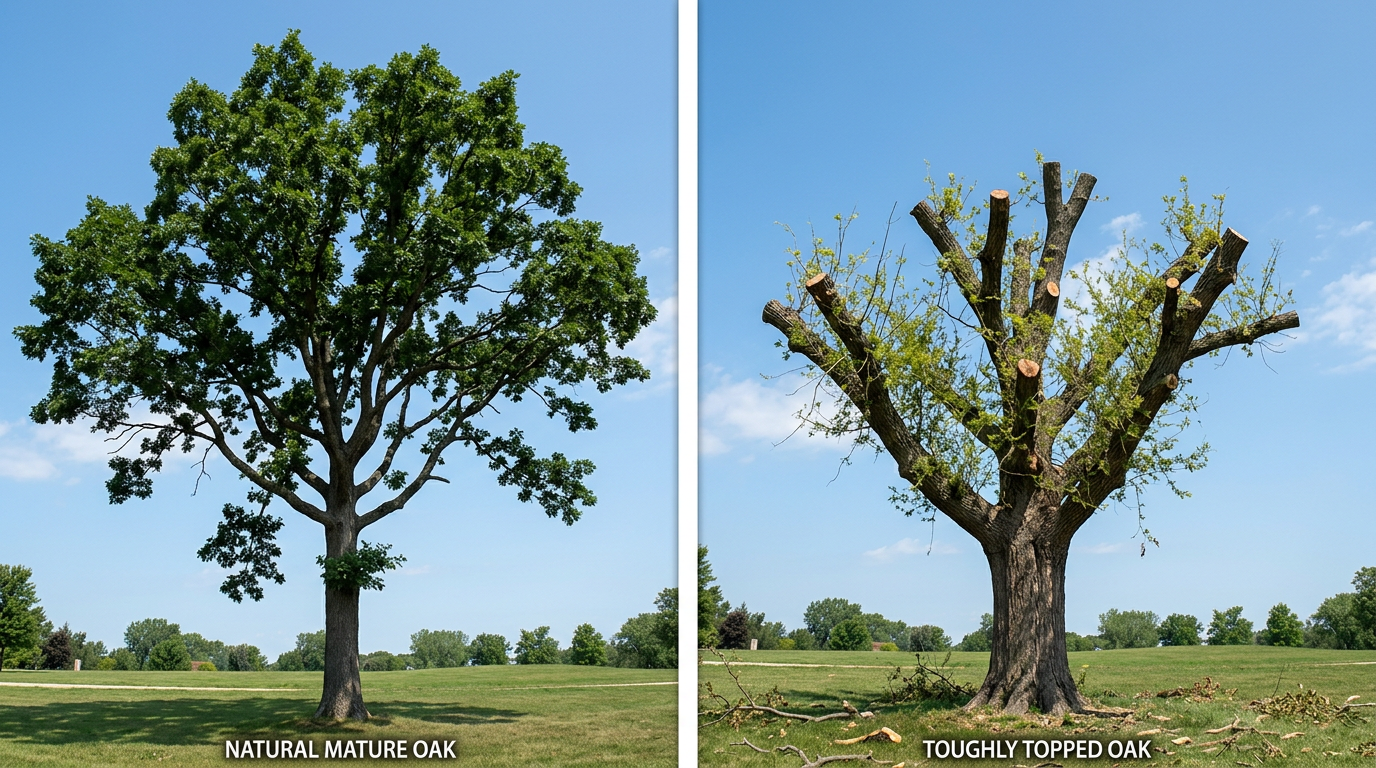
Tree topping involves cutting main branches or the central leader back to stubs, lateral branches, or predetermined heights without regard for tree biology. This practice removes 50-100% of the leaf-bearing crown, severely compromising the tree’s ability to produce food through photosynthesis.
Crown reduction, by contrast, follows ANSI A300 pruning standards by making selective cuts to lateral branches that are at least one-third the diameter of the removed branch. This technique, also called drop-crotch pruning, maintains the tree’s natural form while reducing overall canopy size. Each cut is made just beyond a suitable lateral branch that can assume the terminal role, allowing the tree to compartmentalize wounds effectively.
The biological difference is profound. When you remove a tree’s entire photosynthetic capacity through topping, the tree responds with survival mechanisms that actually increase long-term hazards. Monona’s mature oak and maple trees, common throughout neighborhoods like Winnequah and Maywood, are particularly susceptible to the stress responses that topping triggers.
Professional tree pruning through crown reduction preserves the tree’s ability to produce energy while achieving size management goals. Our trained crews understand species-specific growth patterns and can reduce canopy size by 15-25% while maintaining structural integrity—a crucial consideration for properties near Lake Monona where wind exposure increases storm risk.
The Hidden Dangers of Topped Trees in Monona
Topped trees create multiple hazards that compound over time, particularly problematic in Monona’s climate conditions. Epicormic growth—the rapid sprouting of new shoots from dormant buds along the trunk and remaining branches—occurs within weeks of topping. These shoots grow extremely fast, often 6-10 feet per year, but attach weakly to the parent branch.
Unlike natural branches that develop strong wood connections over years, epicormic shoots have poor attachment strength. Wisconsin’s ice storms and high winds easily break these weakly attached limbs, creating falling hazards for homes, vehicles, and pedestrians. The irony is stark: homeowners top trees to reduce storm risk, but actually increase it dramatically.
Sunscald and bark damage represent another serious consequence. Mature tree bark develops in shade conditions created by the full canopy. When topping suddenly exposes the trunk and major branches to direct sunlight, the bark can literally cook, creating entry points for decay organisms and insects. Monona’s intense summer sun reflecting off Lake Monona compounds this problem for lakefront properties.
Compartmentalization failure occurs because topped trees cannot properly seal wounds. Trees naturally compartmentalize injuries by forming barrier zones around wounds, but large topping cuts exceed the tree’s ability to close effectively. Decay fungi enter through these open wounds, spreading throughout the tree’s structure and creating internal weakness that may not be visible for years.
Our crews regularly remove topped trees that have become structurally unsound 5-10 years after the initial topping. The short-term cost savings of topping versus proper tree care disappears when you factor in increased maintenance, property damage risk, and eventual tree removal costs.
ANSI A300 Crown Reduction: The Professional Alternative
The American National Standards Institute A300 pruning standards provide science-based guidelines for proper tree care that protect both tree health and public safety. Crown reduction following A300 standards involves making cuts to lateral branches that are large enough to assume the terminal role—typically at least one-third the diameter of the removed portion.
Proper cut placement is critical for successful crown reduction. Cuts should be made just beyond the branch collar, the swollen area where the branch attaches to the parent stem. This location allows the tree to compartmentalize the wound effectively, preventing decay from entering the main stem. Our experienced crews understand these anatomical markers and make precise cuts that promote healing.
Species-specific considerations guide our crown reduction approach. Monona’s common oak species, including white oak and bur oak, respond well to moderate crown reduction during dormant season. However, these trees should never have more than 25% of their canopy removed in a single season. Maples, abundant in Monona’s established neighborhoods, can tolerate slightly more aggressive reduction but require careful attention to branch selection to maintain their natural form.
Timing matters significantly for crown reduction success. Dormant season tree pruning, typically November through March in Wisconsin, minimizes stress on trees and reduces disease transmission risk. Oak wilt, a devastating fungal disease affecting Monona’s oak population, spreads through fresh wounds during active season. Our crews schedule crown reduction work during dormant periods whenever possible to protect tree health.
The reduction process involves multiple considerations: maintaining the tree’s natural form, preserving structural integrity, and achieving the homeowner’s size management goals. Unlike topping’s arbitrary height cuts, crown reduction requires understanding each tree’s growth pattern and making selective decisions branch by branch.
Recognizing When Your Monona Trees Need Professional Attention
Several warning signs indicate your trees may benefit from professional crown reduction rather than topping. Overextended branches that reach toward power lines, buildings, or other structures often prompt homeowners to consider drastic cutting. However, selective reduction of these specific branches maintains tree health while addressing clearance concerns.
Storm damage frequently creates situations where homeowners consider topping as a quick fix. After severe weather events common in Dane County, broken or damaged branches may make a tree appear hazardous. Professional assessment can determine whether crown reduction, selective pruning, or complete removal best addresses safety concerns while preserving as much of the tree as possible.
Utility clearance issues around power lines require careful attention. While utility companies may perform emergency clearance cutting that resembles topping, property owners can proactively address these situations through proper crown reduction. Working with experienced tree care professionals ensures utility clearance while maintaining tree health and appearance.
Declining tree health sometimes manifests as excessive canopy size relative to root system capacity. Trees stressed by construction damage, soil compaction, or other factors may benefit from crown reduction to balance the canopy with the tree’s reduced ability to support it. This therapeutic approach differs significantly from topping’s destructive impact.
Property development concerns often arise when mature trees seem too large for their space. Rather than topping these valuable assets, crown reduction can manage size while preserving the trees that add significant value to Monona properties. Mature trees can add 10-15% to property values, making their preservation a sound financial decision.
Choosing Professional Tree Care in Monona
Selecting qualified tree care professionals protects your investment and ensures proper techniques. At Extreme Tree Service, our team brings extensive hands-on experience and unwavering commitment to ANSI A300 and ANSI Z133 safety standards to every project throughout the Madison metro area.
Professional training and safety compliance distinguish qualified tree care companies from casual operators. Our crews undergo regular training in proper tree pruning techniques, equipment operation, and safety protocols. We carry comprehensive insurance coverage and follow OSHA guidelines for tree care operations, protecting both our workers and your property.
Equipment and expertise matter significantly for crown reduction work. Large tree crown reduction often requires aerial lifts, rigging equipment, and specialized cutting tools. Our professional-grade equipment allows precise cuts in challenging positions while maintaining safety standards. Climbing expertise enables our crews to access difficult areas while making proper cuts that promote tree health.
Local knowledge of Monona’s tree species, soil conditions, and climate challenges informs our approach to each project. Understanding how freeze-thaw cycles affect wound healing, recognizing species-specific growth patterns, and knowing local pest and disease pressures like emerald ash borer helps us provide appropriate recommendations for your specific situation.
Comprehensive assessment precedes any crown reduction work. Our experienced team evaluates tree health, structural integrity, and site-specific factors before recommending pruning approaches. This assessment process often reveals alternatives to crown reduction or identifies additional tree care needs that address underlying problems.
When you’re considering tree size management for your Monona property, remember that proper crown reduction protects your trees, your property, and your investment. The short-term appeal of topping’s dramatic results cannot overcome the long-term problems it creates.
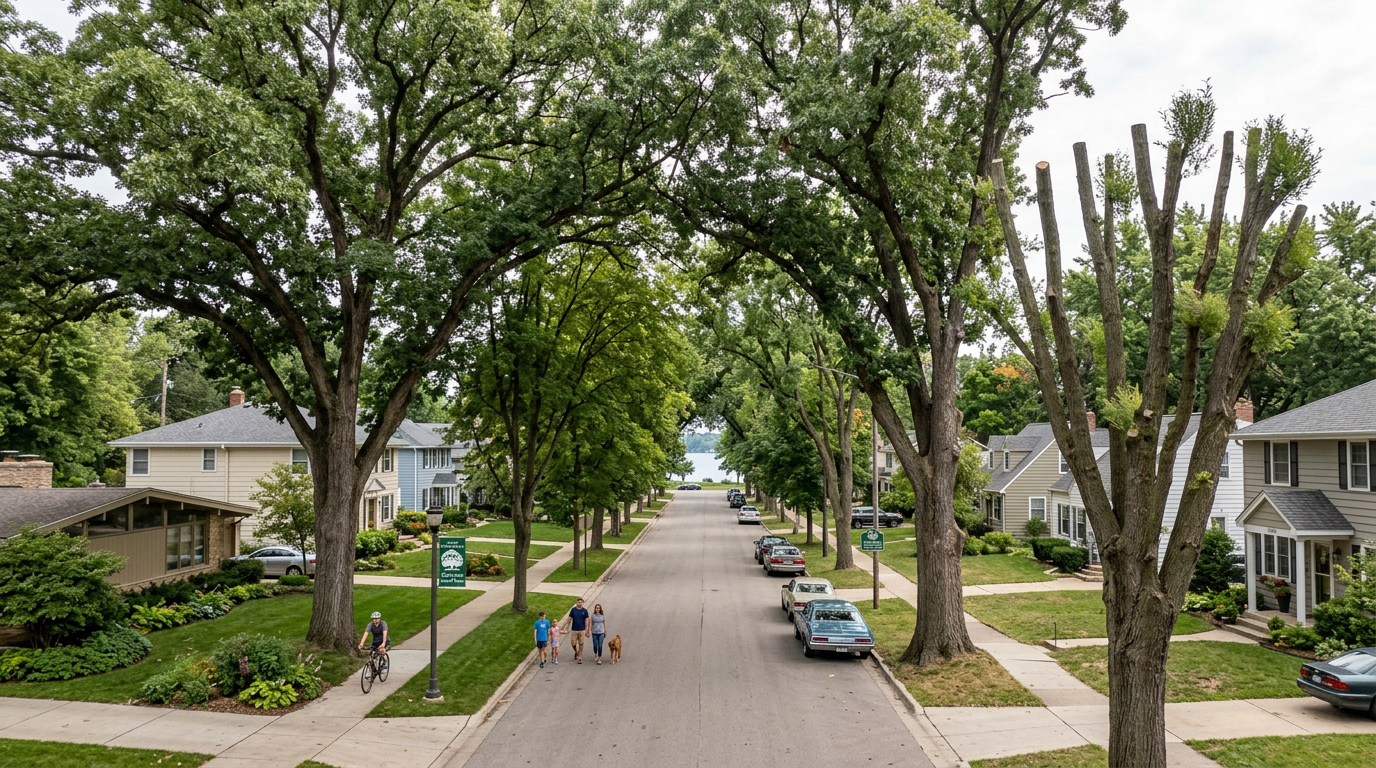
Monona’s mature trees represent decades of growth and significant community value. From the established oaks in Winnequah to the maple-lined streets throughout our neighborhoods, these trees define our community character while providing environmental benefits including air purification, stormwater management, and energy savings through shade and windbreak effects.
Professional crown reduction preserves these benefits while addressing legitimate size management concerns. Unlike topping, which destroys a tree’s natural beauty and structural integrity, proper reduction techniques maintain the tree’s form while achieving practical goals. The investment in professional tree care pays dividends through extended tree life, reduced maintenance costs, and preserved property values.
At Extreme Tree Service, our experienced crews understand the importance of Monona’s urban forest. We’ve served the Madison metro area with professional tree care that prioritizes tree health and safety. Our commitment to industry best practices and ongoing professional development ensures your trees receive care that protects both their immediate and long-term health.
Don’t let well-meaning but misguided topping destroy your valuable trees. Contact Extreme Tree Service today at (𝟲𝟬𝟴) 𝟰𝟳𝟳-𝟭𝟲𝟳𝟬 for professional crown reduction services that preserve your trees’ health and beauty. Our experienced team provides free estimates and expert guidance for all your Monona tree care needs. Visit extremetreeservicewi.com to learn more about our comprehensive tree care services throughout Dane County.
