Pruning Mature Oaks in Madison: Timing Is Everything
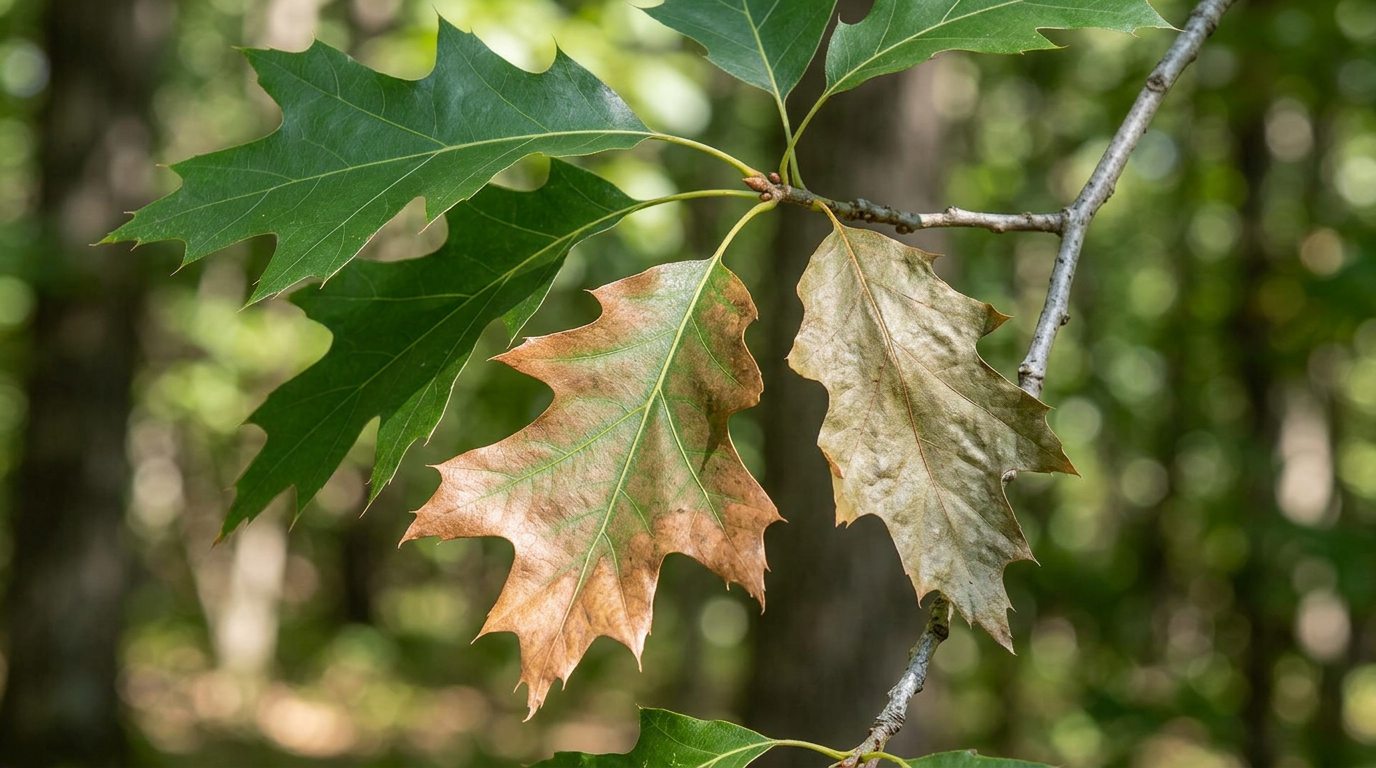
Oak wilt represents the greatest threat to oak trees in Wisconsin, caused by the fungus Ceratocystis fagacearum that blocks water movement through the tree’s vascular system. This disease spreads through two primary pathways: root grafts between neighboring trees and insect vectors attracted to fresh wounds during the growing season.
The Wisconsin DNR has documented oak wilt in all 72 counties, with Dane County experiencing particularly high infection rates due to our dense urban oak populations. Red oak species (including northern red oak, black oak, and pin oak common in Madison neighborhoods) typically die within one growing season after infection. White oak species show more resistance but can still succumb over several years.
Fresh pruning wounds create entry points for the fungus when sap-feeding beetles carry spores from infected trees. These nitidulid beetles are most active during warm weather from April through July, making this period extremely dangerous for oak pruning. The sweet-smelling sap from fresh cuts attracts these vectors within minutes of wounding, explaining why timing restrictions are so critical.
Madison’s isthmus geography, with Lake Mendota and Lake Monona creating microclimates, can extend the dangerous period as temperatures remain moderate longer than in surrounding areas. Middleton’s mature oak canopy, particularly in established neighborhoods near Pheasant Branch Conservancy, requires especially careful management due to the interconnected root systems that facilitate disease spread.
Wisconsin DNR Oak Pruning Guidelines: Safe Windows and Restrictions
The Wisconsin Department of Natural Resources has established specific guidelines for oak wilt prevention through proper pruning timing. These science-based recommendations reflect decades of research and field experience managing the disease across the state.
The safe pruning window for oaks in Wisconsin runs from October 1st through March 31st, when temperatures consistently remain below 50°F and beetle activity ceases. This dormant season timing allows wounds to begin healing before spring warmth reactivates insect vectors. However, Dane County’s variable spring weather requires extra caution, as warm February or March days can trigger early beetle emergence.
Emergency pruning of hazardous oak limbs can occur year-round but requires immediate wound treatment with approved sealants. The Wisconsin DNR recommends latex-based wound paints applied within 15 minutes of cutting to prevent beetle access. While wound paints are generally discouraged for most tree species, oaks represent a critical exception due to oak wilt transmission risks.
Our Extreme Tree Service crews carry approved wound sealants on every job and understand the urgency required when emergency oak care becomes necessary during the growing season. We’ve responded to storm damage throughout Madison, from the Capitol Square area to commercial districts, always prioritizing immediate wound protection when warm-season pruning cannot be avoided.
Professional training in oak wilt recognition helps our team identify early symptoms and recommend appropriate management strategies. Wilting leaves that progress from the crown downward, particularly during summer months, warrant immediate professional assessment and potential treatment planning.
Proper Oak Pruning Techniques: Beyond Timing Considerations
Effective pruning of mature oaks requires understanding both the species’ growth patterns and structural requirements. Oak trees develop strong central leaders and horizontal branching patterns that must be preserved through careful selective pruning rather than aggressive crown reduction.
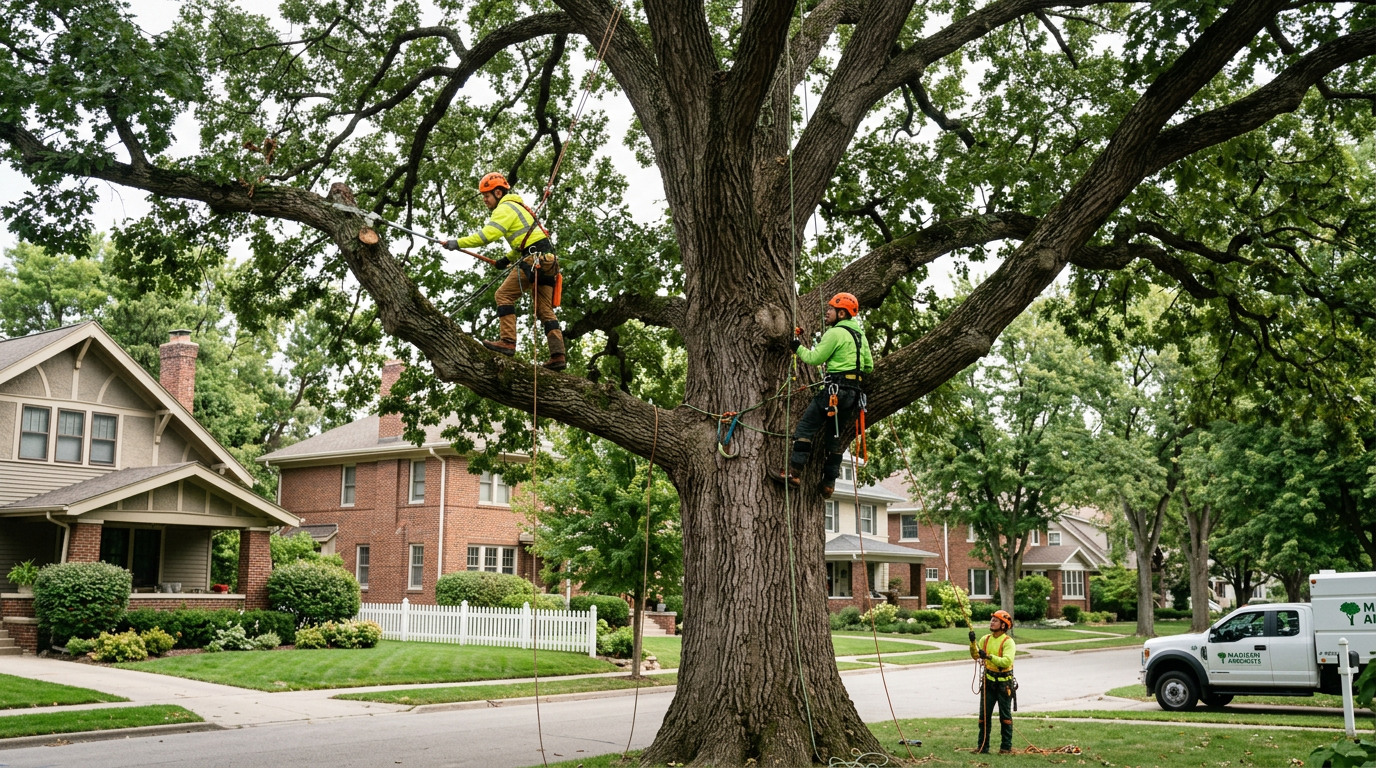
Structural pruning focuses on removing competing leaders, crossing branches, and weak attachments while maintaining the tree’s natural form. Mature oaks in Madison’s urban environment often require crown cleaning to remove deadwood and declining branches that pose safety risks to nearby structures and pedestrians. The ANSI A300 standards we follow specify proper cutting techniques that promote rapid wound closure and minimize stress.
Crown thinning may be appropriate for mature oaks showing signs of overcrowding, particularly in Middleton’s densely planted residential areas where trees compete for light and space. However, oak trees should never lose more than 25% of their live crown in a single pruning cycle, as excessive removal weakens the tree’s ability to photosynthesize and defend against diseases.
Proper cutting technique requires three-cut methods for branches over two inches in diameter to prevent bark stripping. The final cut must be made just outside the branch collar, allowing the tree’s natural defense mechanisms to compartmentalize the wound effectively. Our experienced crews understand these technical requirements and carry the specialized equipment necessary for safe, effective oak pruning.
Large oak removals in established neighborhoods often require crane assistance due to limited access and proximity to structures. Extreme Tree Service maintains relationships with certified crane operators throughout the Madison metro area, ensuring safe removal when oak wilt or structural failure makes tree preservation impossible.
Recognizing When Your Madison-Area Oaks Need Professional Care
Homeowners throughout Dane County should monitor their oak trees for signs requiring professional intervention. Deadwood removal represents the most common need, as mature oaks naturally shed interior branches as they age. However, distinguishing between normal aging and disease-related decline requires experienced assessment.
Sudden leaf wilting during the growing season, particularly if it begins in the upper crown and progresses downward, may indicate oak wilt infection. Leaves typically turn brown while remaining attached to branches, creating a distinctive appearance that differs from normal autumn color change. Any rapid decline in oak health during summer months warrants immediate professional evaluation.
Structural concerns become more common as oaks mature, particularly in urban environments where soil compaction, construction damage, and limited root space create stress. Co-dominant stems, large horizontal limbs, and cavities from previous storm damage all require professional assessment to determine appropriate management strategies.
Madison’s freeze-thaw cycles can create frost cracks in oak trunks, particularly on the south and southwest sides where temperature fluctuations are most extreme. These vertical splits may require professional evaluation to determine if structural integrity has been compromised and whether preventive cabling or bracing might be beneficial.
Storm damage assessment requires immediate attention, as broken branches and torn bark create entry points for oak wilt and other pathogens. Our emergency response capabilities serve the entire Madison metro area, from downtown’s historic neighborhoods to Middleton’s newer developments, providing rapid assessment and treatment when weather events threaten oak health.
Seasonal Considerations for Dane County Oak Care
Wisconsin’s harsh winters and variable spring weather create unique challenges for oak tree maintenance in the Madison area. The extended dormant season from November through March provides the safest window for major pruning work, but homeowners should understand how seasonal factors affect their trees year-round.
Winter pruning offers several advantages beyond oak wilt prevention. Dormant trees are easier to assess structurally without leaf cover obscuring branch architecture. Snow load can reveal weak branches that might fail during future storms, making winter an ideal time for preventive removal. However, extremely cold temperatures below -10°F can make wood brittle and dangerous to cut.
Spring emergence requires careful monitoring as temperatures fluctuate. Madison’s location between two large lakes can create unpredictable warm spells that activate beetle populations earlier than expected. Property owners should avoid any non-emergency oak work from April through July, even if temperatures seem cool.
Summer months bring the highest oak wilt risk but also reveal tree health issues that may require attention. Drought stress, common during Wisconsin summers, can weaken oaks and make them more susceptible to various diseases. Professional assessment during this period helps identify problems that can be addressed during the next safe pruning window.
Fall preparation involves monitoring for storm damage and planning winter pruning needs. September and early October provide opportunities for final health assessments before the safe pruning window opens. This timing allows homeowners to schedule necessary work and prepare for winter tree care needs.
Madison's mature oak trees represent irreplaceable community assets that require knowledgeable, careful management to ensure their long-term survival. Understanding oak wilt risks, following Wisconsin DNR pruning guidelines, and recognizing when professional intervention is needed can help preserve these magnificent trees for future generations.
Extreme Tree Service brings the experience, equipment, and commitment to safety standards necessary for effective oak tree care throughout Dane County. Owner Tommy Mason and his professionally trained crews understand the unique challenges facing our region’s urban forest and stand ready to help protect your valuable oak trees through proper pruning, disease prevention, and emergency response services.
Our team follows ANSI A300 pruning standards and ANSI Z133 safety requirements while staying current with Wisconsin DNR guidelines and industry best practices. We’re actively pursuing additional certifications to enhance our expertise and better serve the Madison-area community.
Don’t risk your mature oaks to improper timing or inadequate techniques. Contact Extreme Tree Service today for professional assessment and care recommendations. Our team serves Madison and surrounding Dane County communities with the expertise and dedication your trees deserve. Visit extremetreeservicewi.com to schedule your consultation and learn more about protecting your oak tree investment.
