Emerald Ash Borer in Madison & Sun Prairie: Treatment vs. Removal Guide
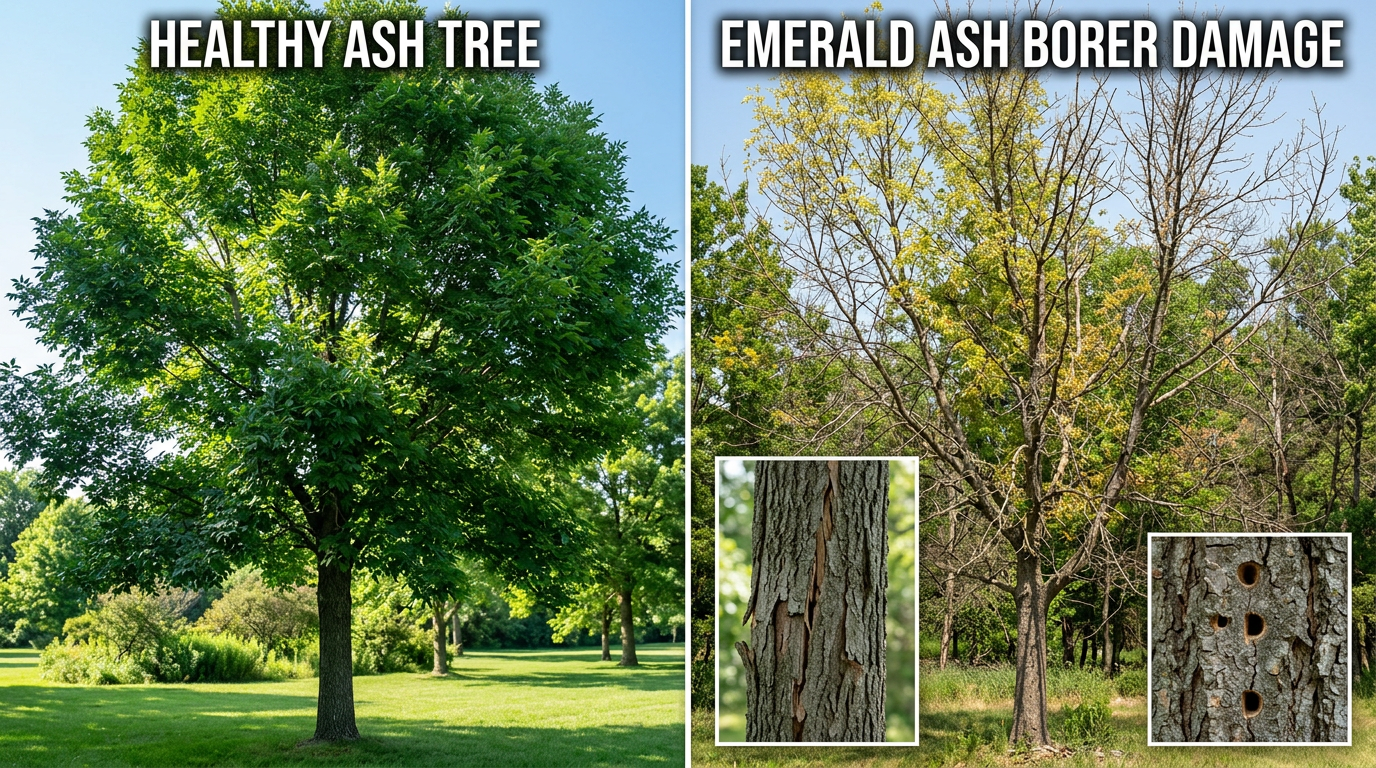
The emerald ash borer represents one of the most destructive forest pests in North American history, and Dane County sits squarely within its established range. This metallic green beetle, roughly half an inch long, attacks all native ash species common to our region, including white ash, green ash, and black ash. The adult beetles feed on ash foliage, causing minimal damage, but their larvae create the real devastation by tunneling through the tree’s cambium layer—the vital tissue that transports nutrients and water.
The EAB lifecycle in Wisconsin’s climate follows a predictable pattern. Adults emerge in late May through early June, coinciding with our typical last frost dates. Females lay eggs in bark crevices throughout the summer, and larvae hatch within two weeks to begin their destructive feeding. In our humid continental climate, most EAB complete their development in one year, though cold winters can extend the cycle to two years for some individuals.
Once EAB larvae establish in an ash tree, they create distinctive S-shaped galleries under the bark that effectively girdle the tree by disrupting nutrient flow. Trees typically show decline symptoms within two to three years of initial infestation, beginning with crown dieback and progressing to complete mortality within four to five years without intervention. The process accelerates in stressed trees, which are common in urban environments like Madison’s dense isthmus development and Sun Prairie’s construction zones.
Wisconsin’s ash trees face particular vulnerability due to our climate patterns. The freeze-thaw cycles common to Dane County create bark stress that provides additional entry points for EAB females seeking egg-laying sites. Additionally, our relatively mild summers provide optimal conditions for EAB development, while periodic drought stress—increasingly common in recent years—weakens trees’ natural defenses against the pest.
Why Madison and Sun Prairie Ash Trees Require Immediate Attention
The unique characteristics of Dane County’s urban forest create both opportunities and challenges for managing emerald ash borer. Madison’s isthmus geography, nestled between Lakes Mendota and Monona, creates microclimates that can influence EAB development and tree stress levels. Properties closer to the lakes may experience moderated temperatures that slightly slow EAB development, while inland areas face more extreme temperature fluctuations that stress trees and accelerate decline.
Sun Prairie’s explosive growth presents distinct EAB management challenges. As Wisconsin’s fastest-growing city, many neighborhoods feature ash trees planted during development booms of the 1980s and 1990s. These trees, now reaching maturity, represent significant landscape investments that homeowners are reluctant to lose. However, the construction activity associated with continued development creates additional stress on existing trees, making them more susceptible to EAB attack and reducing treatment success rates.
The treatment window for ash trees in our region is rapidly closing. Trees showing more than 30% crown dieback rarely respond well to treatment, and those with extensive woodpecker damage—a common sign of advanced EAB infestation—are typically beyond saving. Our crews regularly encounter ash trees throughout Madison and Sun Prairie that appeared healthy just two seasons ago but now show clear signs of decline that make treatment economically unfeasible.
Municipal ash tree management in Madison provides important context for private property decisions. The city has implemented a comprehensive EAB management program that includes both treatment of high-value public trees and systematic removal of declining specimens. This creates a patchwork effect where treated public trees may thrive while untreated private trees decline, potentially creating liability issues for property owners whose dying ash trees threaten neighboring properties or public infrastructure.
The economic implications extend beyond individual tree value. In Sun Prairie’s competitive real estate market, properties with healthy, mature trees command premium prices, while those with dead or declining ash trees face reduced marketability and potential buyer concerns about removal costs and landscape replacement expenses.
EAB Treatment Options and Realistic Expectations for Wisconsin Trees
Emamectin benzoate trunk injections represent the gold standard for emerald ash borer treatment in Wisconsin. This systemic insecticide, applied directly into the tree trunk, provides two years of protection when properly administered. The treatment works by making the tree’s tissues toxic to EAB larvae, breaking the pest’s lifecycle. However, success depends heavily on tree health at the time of treatment and proper application timing.
Treatment timing in Dane County follows specific seasonal windows. Applications typically occur from mid-April through mid-October, with optimal results achieved during active growing seasons when trees can effectively transport the insecticide throughout their vascular system. Our humid continental climate means trees enter dormancy earlier than in more southern regions, potentially shortening the effective treatment window in fall applications.
Realistic treatment expectations vary significantly based on infestation levels. Healthy ash trees with no visible EAB symptoms typically show excellent treatment response, maintaining full canopies and normal growth patterns. Trees with early-stage infestations—characterized by minor crown dieback and occasional woodpecker activity—often stabilize and recover with consistent treatment. However, trees showing extensive crown dieback, significant bark splitting, or heavy woodpecker damage rarely justify treatment costs.
Treatment costs must be evaluated against long-term tree value and removal expenses. A mature ash tree providing significant shade and landscape value may justify ongoing treatment expenses, especially when removal and replacement costs could be substantial. However, smaller or less valuable trees may not warrant ongoing treatment expenses, particularly when considering the indefinite nature of EAB pressure in our region.
Environmental factors specific to Madison and Sun Prairie influence treatment success. Trees growing in compacted soils common to urban developments may show reduced treatment uptake. Similarly, ash trees stressed by construction activity, road salt exposure, or drought conditions may not respond as effectively to treatment. Our crews evaluate these site-specific factors when helping homeowners make treatment decisions.
Signs Your Ash Trees Need Immediate Professional Assessment
Crown dieback represents the most reliable early indicator of EAB infestation in Dane County ash trees. This typically begins in the upper canopy with individual branches failing to leaf out in spring or showing premature fall color. Unlike drought stress or other environmental factors that cause uniform decline, EAB-related dieback often appears random and progressive, affecting different sections of the crown over successive growing seasons.
Bark splitting and unusual woodpecker activity signal advanced EAB infestations. As larvae create extensive galleries under the bark, the tree’s cambium layer dies and bark begins separating from the trunk. Woodpeckers, particularly the pileated woodpeckers common to our region, aggressively feed on EAB larvae, creating distinctive rectangular holes and bark flaking. While woodpecker damage indicates the presence of EAB, extensive feeding activity often means the infestation has progressed beyond effective treatment.
D-shaped exit holes, roughly 1/8 inch in diameter, provide definitive evidence of EAB emergence. These distinctive holes appear in bark during late spring and early summer as adult beetles emerge to mate and lay eggs. However, exit holes indicate the previous year’s generation, meaning current infestations may be more advanced than hole counts suggest. Fresh exit holes with light-colored wood visible inside indicate recent emergence and active infestations.
Epicormic sprouting—vigorous shoot growth from the trunk and main branches—often accompanies EAB stress in ash trees. This represents the tree’s attempt to compensate for crown loss by producing new photosynthetic tissue. While epicormic growth might initially appear positive, it actually indicates significant stress and typically precedes rapid decline in untreated trees.
Seasonal timing affects symptom visibility in Wisconsin’s climate. EAB symptoms become most apparent during late summer and early fall when stressed trees show premature yellowing and leaf drop. However, waiting until symptoms are obvious often means missing the optimal treatment window. Professional assessment during the growing season can identify subtle signs of infestation before obvious decline occurs.
Making the Treatment vs. Removal Decision: Economic and Practical Considerations
The economics of ash tree management in Dane County require careful analysis of multiple factors. Treatment costs typically vary based on tree size and condition, applied every two years for the foreseeable future. This creates a long-term financial commitment that homeowners must weigh against tree value and removal alternatives.
Tree removal costs vary significantly based on tree size, location, and complexity. A typical mature ash tree removal in Madison or Sun Prairie varies widely depending on proximity to structures, power lines, and access limitations. Trees requiring crane removal due to tight spaces common in established neighborhoods can be substantially more expensive. These one-time costs must be compared against ongoing treatment expenses over the tree’s remaining lifespan.
Property value considerations extend beyond immediate costs. Mature shade trees can add significant value to properties in competitive markets like Sun Prairie’s growing residential sector. However, dead or declining trees create liability concerns and may actually reduce property marketability. The decision becomes more complex when considering replacement costs and the decades required for new plantings to provide equivalent shade and landscape value.
Risk assessment plays a crucial role in the decision-making process. Ash trees in decline pose increasing hazards as branch failure becomes more likely. Trees overhanging homes, driveways, or neighboring properties create liability exposure that may outweigh treatment benefits. Our experienced crews evaluate structural integrity alongside EAB symptoms to provide comprehensive risk assessments.
Timing considerations affect both treatment success and removal logistics. Trees showing early EAB symptoms may respond well to immediate treatment, while delayed decisions often result in treatment failure and emergency removal situations. Planning removal during dormant seasons typically reduces costs and minimizes landscape disruption, but waiting too long may force emergency action during peak growing seasons when crews are busiest.
Professional Tree Care Standards and Safety Considerations
Proper EAB management requires adherence to established industry standards and safety protocols. Treatment applications must follow EPA-approved label instructions and state regulations governing pesticide use. Tree removal operations demand compliance with ANSI Z133 safety standards, particularly when working near power lines or structures common in Madison’s dense neighborhoods and Sun Prairie’s developing subdivisions.
Equipment and training requirements for EAB management exceed typical tree care capabilities. Trunk injection systems require specialized equipment and calibration to ensure proper dosage and application depth. Removal of large ash trees often necessitates crane operations, aerial lifts, and rigging systems that demand extensive training and experience. Our crews maintain current training on both treatment protocols and advanced removal techniques to handle the full spectrum of EAB management needs.
Insurance and liability considerations become critical when dealing with declining ash trees. Property owners face potential liability for damage caused by failing trees, making professional assessment and documentation essential. Qualified tree care providers carry comprehensive liability insurance and workers’ compensation coverage to protect both their crews and property owners during treatment or removal operations.
Documentation and follow-up protocols ensure treatment effectiveness and safety monitoring. Professional EAB treatment includes detailed records of application dates, dosages, and tree response. Regular monitoring allows for early detection of treatment failure and timely intervention before trees become hazardous. Our systematic approach includes photographic documentation and annual assessments to track tree health and treatment success.
Local knowledge and experience provide significant advantages in EAB management decisions. Understanding Dane County’s specific climate patterns, soil conditions, and urban forest characteristics helps predict treatment success and identify optimal timing for interventions. Our crews’ extensive experience throughout Madison, Sun Prairie, and surrounding communities provides valuable insights into site-specific factors that influence EAB management outcomes.
The emerald ash borer crisis in Dane County demands prompt, informed decision-making from property owners throughout Madison and Sun Prairie. Every growing season that passes without action reduces your options and increases both costs and risks associated with declining ash trees. The narrow window for effective treatment means that trees appearing healthy today may be beyond saving by next year if EAB populations continue their established patterns in our region.
Professional assessment represents the critical first step in developing an effective EAB management strategy. Our experienced crews at Extreme Tree Service have guided hundreds of Dane County homeowners through these difficult decisions, combining hands-on field experience with commitment to industry best practices and safety standards. We understand the unique challenges facing ash trees in Madison’s isthmus environment and Sun Prairie’s rapidly developing landscape.
The investment in professional evaluation pays dividends regardless of the ultimate treatment decision. Early identification of EAB infestations allows for strategic planning of treatment or removal timing, potentially saving significant costs compared to emergency situations. Our comprehensive assessments include risk evaluation, treatment feasibility analysis, and detailed recommendations to help you make informed decisions about your property’s ash trees.
Don’t wait until declining ash trees become emergency situations that threaten your property and safety. Contact Extreme Tree Service today for a thorough evaluation of your ash trees and personalized recommendations based on their current condition, location, and value to your landscape. Our commitment to professional standards and extensive experience throughout Madison, Sun Prairie, Middleton, Verona, Fitchburg, and all of Dane County ensures you’ll receive the expert guidance needed to navigate this challenging situation successfully.
Call us at (𝟲𝟬𝟴) 𝟰𝟳𝟳-𝟭𝟲𝟳𝟬 or visit extremetreeservicewi.com to schedule your ash tree assessment. Time is critical—protect your investment and your property with professional EAB management solutions tailored to Wisconsin’s unique conditions.
