
Professional Tree Removal, Trimming & Stump Grinding in
Sun Prairie & Madison, WI
24/7 Emergency Service
Call (608) 477-1670
Welcome to the Extreme Tree Service Blog
Stump Grinding in Madison: Complete Service Guide
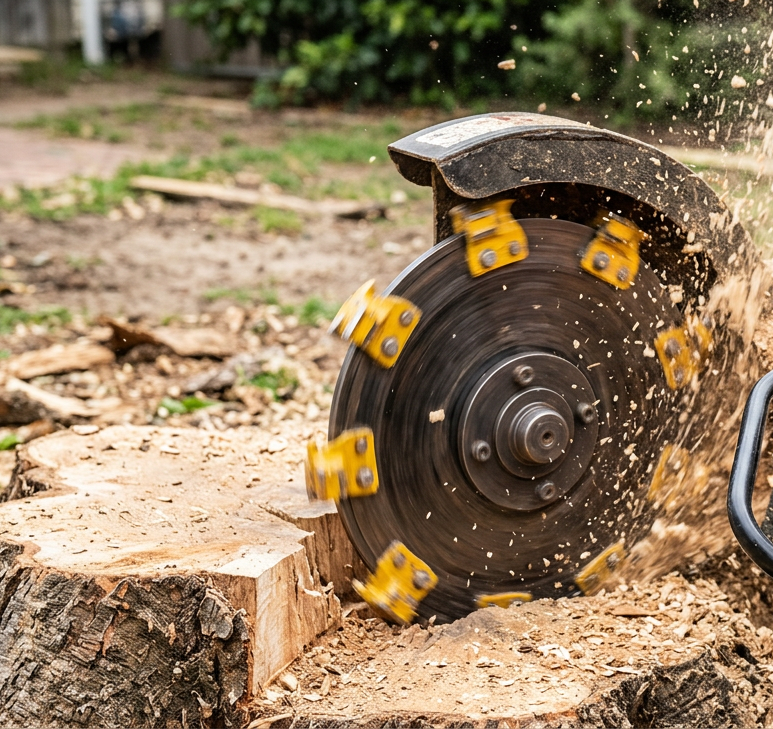
Stump grinding uses specialized mechanical equipment to chip away tree stumps and surface roots, converting them into useful wood mulch. Unlike complete stump removal methods that attempt to extract the entire root system, grinding focuses on eliminating the visible stump and major surface roots that prevent normal lawn care and landscaping.
The process begins with a thorough site assessment to identify underground utilities—a critical step in Madison where older neighborhoods often have unmarked service lines. Our crews always coordinate with Wisconsin’s Diggers Hotline (call 811) before beginning any grinding work, especially important in established areas like Nakoma or near campus where utility density is high.
Professional stump grinders use rotating cutting wheels with carbide teeth to systematically chip away wood fiber. The machine operator controls the cutting depth and pattern, typically working from the outside edges toward the center. Madison’s clay-heavy soils can dull cutting teeth more quickly than sandy soils, requiring experienced operators who understand how to adjust cutting techniques for local soil conditions.
The grinding process produces wood chips and sawdust that serve multiple purposes in site restoration. These organic materials help improve soil structure in Madison’s often-compacted clay soils while providing natural mulch for surrounding landscape beds. Proper grinding technique ensures the chips are sized appropriately for their intended use, whether backfilling the stump hole or spreading as garden mulch.
Depth Options and Site Considerations
Stump grinding depth significantly impacts both cost and future land use options. Standard residential grinding typically extends 6-8 inches below grade, sufficient for lawn restoration and most landscaping projects. However, Madison’s freeze-thaw cycles and clay soils require careful consideration of depth requirements based on your specific restoration plans.
For basic lawn restoration in areas like Fitchburg or Sun Prairie, shallow grinding 4-6 inches below grade allows grass establishment while minimizing cost. This depth works well when the area will remain lawn or receive light landscaping. However, shallow grinding may leave larger root sections that can interfere with future digging or construction projects.
Medium-depth grinding of 8-12 inches below grade suits most Madison homeowners planning garden beds, patio installations, or tree replanting. This depth eliminates interference with typical landscaping activities while ensuring adequate soil depth for new plantings. The additional grinding cost often proves worthwhile for properties in established neighborhoods like Shorewood Hills where landscape integration matters.
Deep grinding extending 12-18 inches below grade becomes necessary for construction projects, driveway extensions, or areas requiring heavy equipment access. Commercial properties near the Capitol Square or University Research Park often require deep grinding to meet municipal specifications for future development. Deep grinding also proves beneficial in Madison’s clay soils where root decay can create settling issues over time.
Site-specific factors influence optimal grinding depth. Properties with mature oak or maple stumps common throughout Dane County may require deeper grinding due to extensive root systems. Areas with poor drainage, common in Madison’s low-lying neighborhoods, benefit from deeper grinding to improve soil structure and water infiltration.
Cleanup and Site Restoration Process
Professional stump grinding service includes comprehensive cleanup and site preparation for your intended use. The grinding process produces significant quantities of wood chips and sawdust that require proper management to ensure successful site restoration, particularly important in Madison where clay soils can create drainage challenges.
Initial cleanup involves removing large wood chips and debris from the immediate grinding area. Our crews separate coarse chips suitable for mulch from fine sawdust and soil mixture created during grinding. This separation proves especially important in Madison’s clay soils where fine organic matter can improve soil structure when properly incorporated.
The stump hole receives careful attention during restoration. Simply filling the depression with wood chips creates settling problems as organic matter decomposes. Professional restoration involves backfilling with a mixture of wood chips, existing soil, and often imported topsoil to achieve proper grade and soil composition. Madison’s clay soils benefit from organic matter addition, but proper ratios prevent drainage problems.
Site grading ensures proper water flow away from buildings and toward appropriate drainage areas. This consideration proves critical in Madison where spring snowmelt and summer storms can create standing water problems. Proper grading also prepares the area for seed establishment or sod installation by creating uniform soil conditions.
Final cleanup includes removing wood chips from surrounding lawn areas, cleaning debris from landscape beds, and protecting nearby plants from grinding residue. Professional crews understand that Madison homeowners value their established landscapes and take care to minimize impact on surrounding areas during the restoration process.
Timing for Replanting and Landscape Restoration
Understanding when to replant after stump grinding ensures successful landscape establishment in Madison’s challenging climate conditions. The timing depends on several factors including grinding depth, soil conditions, intended plantings, and seasonal considerations specific to Wisconsin’s growing season.
Immediate replanting works well for lawn restoration using seed or sod. Grass establishment benefits from the organic matter added during stump grinding, particularly in Madison’s clay soils where organic content improves drainage and root development. Spring and early fall provide optimal conditions for grass establishment, avoiding the stress of summer heat and winter dormancy.
Tree replanting requires more careful timing and site preparation. Most landscape professionals recommend waiting 6-12 months after grinding before planting trees in the same location. This waiting period allows wood chips to begin decomposition and soil settling to stabilize. Madison’s freeze-thaw cycles can accelerate this process, but patience ensures better long-term tree establishment.
Soil testing becomes important when replanting trees near former stump locations. Decomposing wood chips can temporarily tie up soil nitrogen, potentially affecting new tree growth. Adding nitrogen fertilizer or choosing nitrogen-fixing plants can compensate for this temporary nutrient imbalance, particularly important in Madison’s already nutrient-challenged clay soils.
Seasonal timing affects both grinding and replanting success. Spring grinding allows full growing season establishment for new plantings. Fall grinding provides winter settling time before spring planting. Summer grinding works well but may require additional watering for new plantings during Madison’s occasionally dry periods.
Equipment and Safety Considerations
Professional tree service companies use specialized equipment matched to each project’s specific requirements. Stump grinders range from compact units suitable for tight residential spaces in neighborhoods like Monona to large track units capable of handling massive oak stumps common throughout Dane County’s mature landscapes.
Safety protocols become especially important during stump grinding operations. Flying debris can travel significant distances, requiring proper barriers and personal protective equipment. Professional crews follow ANSI Z133 safety standards, maintaining safe work zones and protecting both workers and nearby property from potential hazards.
Underground utility awareness proves critical in Madison where older neighborhoods may have unmarked service lines. Professional services coordinate with Wisconsin’s Diggers Hotline and use utility locating equipment when necessary. This attention to safety prevents costly utility damage and service interruptions that could affect entire neighborhoods.
Weather conditions also influence grinding operations and safety. Madison’s winter conditions can make equipment operation more challenging, while spring’s muddy conditions may require special access considerations. Experienced crews understand these seasonal factors and plan accordingly to ensure safe, efficient operations.
Choosing Professional Stump Grinding Services
Selecting qualified professionals ensures safe, efficient stump grinding that meets your property restoration goals. Professional stump grinding requires specialized equipment, safety training, and understanding of local soil conditions—factors that prove especially important in Madison’s diverse neighborhoods and challenging clay soils.
Equipment selection significantly impacts grinding quality and efficiency. Professional services match grinder size to stump dimensions and site access requirements. Large stumps from mature trees common in Madison’s established neighborhoods require substantial equipment, while smaller ornamental tree stumps need precision grinding to avoid landscape damage.
Local experience matters when dealing with Madison’s specific challenges. Clay soil conditions, freeze-thaw effects, and municipal requirements vary throughout Dane County. Professional services understand these local factors and adjust their techniques accordingly, ensuring better results and fewer complications.
Insurance coverage and licensing provide important protection for property owners. Professional stump grinding services maintain comprehensive liability insurance and workers’ compensation coverage, protecting clients from potential accidents or property damage during operations.
Effective stump grinding transforms problem areas into usable landscape space while addressing the unique challenges of Madison’s climate and soil conditions. From understanding grinding depth requirements to timing replanting for Wisconsin’s growing season, proper planning ensures successful property restoration that enhances your outdoor living space.
At Extreme Tree Service, our experienced crews bring professional training and safety compliance to every stump grinding project throughout Madison and Dane County. We understand how local soil conditions affect grinding techniques and site restoration, ensuring results that meet your specific property goals. Our commitment to industry best practices and comprehensive cleanup sets us apart in the competitive Madison tree service market.
Whether you’re dealing with a single stump in your Middleton backyard or multiple stumps on commercial property near the Capitol, we have the equipment and expertise to handle projects of any size. Our team follows all safety protocols and works efficiently to minimize disruption to your daily routine while delivering professional results.
Ready to reclaim your landscape space? Contact Extreme Tree Service today for a free estimate on professional stump grinding services. Call us at (𝟲𝟬𝟴) 𝟰𝟳𝟳-𝟭𝟲𝟳𝟬 or visit extremetreeservicewi.com to discuss your specific project requirements and learn how our experienced team can help restore your property’s potential. We proudly serve Madison, Middleton, Fitchburg, Sun Prairie, Verona, and surrounding Dane County communities with reliable, professional stump grinding solutions.
Extreme Tree Service - Professional Tree Care Throughout Madison Metro
Serving Madison, Middleton, Fitchburg, Sun Prairie, Verona, and surrounding Dane County communities

Take Action Today!
Contact us now for a FREE
no-obligation estimate!
Don’t let tree problems stress you out any longer. Reach out to us today and take the first step towards a safer, more beautiful property.
SERVING
24-HOUR EMERGENCY SERVICE
CONTACT
Address:
1223 W Main St Unit 262,
Sun Prairie, WI 53590
Main: (608) 477-1670
Copyright 2026. Madison, WI. All Rights Reserved.